
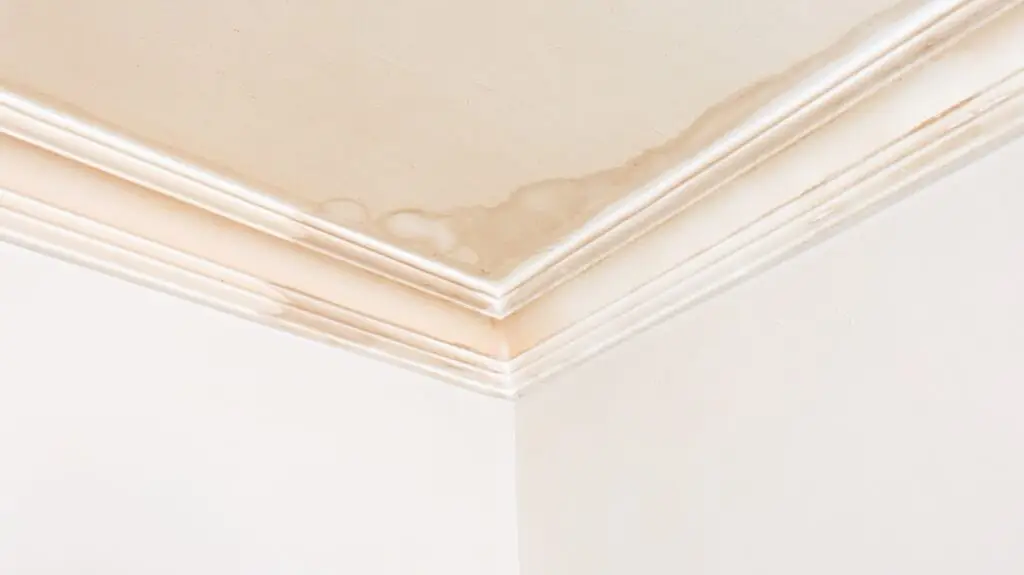
A ceiling stain that appears without a rainstorm can be puzzling. Water is getting somewhere it shouldn’t, but there hasn’t been any rain to explain it.
During colder weather, moisture can come from inside the home as well as outside. Warm, moist air that reaches a cold attic can leave condensation or frost on surfaces. When that frost melts, the resulting drips may resemble a roof leak.
Telling attic condensation and a roof leak apart requires more than looking at the stain. The weather, pattern of moisture and condition of the roof assembly all help establish the cause. Both problems can also exist together.
Can Attic Condensation Look Like a Roof Leak?
Yes. Moisture originating in the attic can wet insulation or reach the ceiling below, producing symptoms similar to exterior water entry.
That similarity makes assumptions risky. Replacing shingles will not necessarily address moisture carried into an attic from the living space. Reducing indoor humidity will not repair damaged flashing that admits rainwater. Both exterior leakage and indoor air leakage can be sources of attic moisture. Understanding which pathway is involved helps determine the appropriate repair.
The location of a stain provides a starting point, but water can travel along framing or other surfaces before becoming visible. The damaged ceiling may not sit directly below the original entry point.
What the Timing of a Ceiling Stain Can Tell You
Weather timing is one of the most useful details to record before an inspection. It narrows the possibilities without proving a diagnosis.
| When Moisture Appears | Possibilities to Investigate |
|---|---|
| During or after rain | Water entry through roofing, flashing or another exterior detail |
| After a cold spell followed by warmer weather | Melting attic frost, snowmelt intrusion or ice-dam backup |
| During cold weather without recent rain | Condensation, while checking for other moisture sources |
| Repeatedly under similar conditions | A recurring defect or moisture pathway that needs tracing |
The sequence matters. A mild day can melt frost inside an attic while also melting snow outside. A drip during a thaw therefore does not, by itself, distinguish condensation from a roof leak.
Keep notes about rain, snowfall, temperature changes and when the stain becomes damp. Photographs taken over time are more useful than a general recollection that the problem happens every winter.
How Attic Frost Forms and Why It Can Drip
Indoor air can carry moisture through gaps around ceiling penetrations and other openings into the attic. When it reaches sufficiently cold surfaces, that moisture can condense or freeze.
A later temperature rise can turn accumulated frost into liquid water. By then, the event that introduced the moisture may have happened days earlier, making the visible drip seem disconnected from its cause.
Bathroom and kitchen exhaust arrangements also deserve attention. A fan that discharges moisture into an attic introduces a different problem from an exterior roof opening, even though both may contribute to wet materials.
This is why the investigation should consider how moisture reaches the attic, rather than stopping at the surface where droplets are found. The roof covering is one part of that assessment.
Why More Ventilation May Not Solve the Problem
Ventilation has a role in attic performance, but adding vents is not a complete response to every moisture problem.
Sealing gaps that let indoor air enter the attic is essential, because ventilation alone cannot solve the moisture problems this leakage can cause. If moist air continues entering through ceiling gaps, addressing that pathway matters.
An assessment may also identify obstructed soffit openings, unsuitable exhaust arrangements or insulation interfering with airflow. Those findings call for different work, so the recommendation should explain the cause being addressed.
Dominion Roofing’s article on common attic ventilation misconceptions provides related context. For a specific home, the aim is a suitable roofing and attic arrangement based on the building’s condition, rather than simply increasing the number of vents.
How Roof Leaks and Ice Dams Complicate the Picture
Exterior water entry remains a possibility even when condensation is present. Flashing around chimneys, vents and roof transitions can develop defects, while damaged roofing can admit rain or meltwater.
Ice dams introduce another pathway. Meltwater can back up at a roof edge and enter the assembly. Because this often occurs during winter weather or thaws, the timing can overlap with melting attic frost. An inspection should therefore consider both the outside roof and accessible evidence inside. Finding condensation does not automatically rule out a roofing defect elsewhere.
If water is actively entering, take steps to protect belongings from a safe location and arrange an assessment. Dominion Roofing’s guidance on winter roof leaks and water damage explains the immediate response while the cause is being established.
What to Record Before a Professional Inspection
You don’t need to enter the attic or climb onto the roof to gather useful information. Start with what you can safely observe indoors and from the ground.
Record:
- When you first noticed the stain or dripping.
- Whether it changes during rain, snowfall or a thaw.
- Whether one area or several rooms are affected.
- Recent roofing, bathroom fan or attic work.
- Any history of repairs in the same location.
Don’t disturb insulation or electrical components to investigate. If a ceiling is bulging, sagging or wet near electrical fittings, keep clear and seek urgent professional assistance.
A professional roof inspection can assess roofing conditions and help establish whether the evidence points to exterior water entry or a wider attic moisture concern. Some findings may require additional assessment by an insulation, ventilation or other building specialist.
Choose the Repair After the Source Is Identified
A stain tells you that moisture has reached the ceiling. It doesn’t tell you which trade or repair will solve the problem. Depending on the findings, the next step may involve roofing or flashing repairs, correction of exhaust discharge, air sealing or other attic work. Repairs should address the identified pathway and any affected materials, with the scope explained before work begins.
For Toronto and GTA homeowners dealing with recurring winter stains, Dominion Roofing’s roof repair team can assess the roofing concerns and explain the recommended next step. Recording the timing and pattern of the moisture gives that assessment a more useful starting point.
Frequently Asked Questions
Can condensation and a roof leak happen at the same time?
Yes. Indoor moisture can collect in an attic while a separate roofing defect admits exterior water. An assessment should account for all relevant evidence instead of assuming one finding explains every stain.
Does a stain near a skylight mean the skylight needs replacing?
No. Moisture may involve the glazing, surrounding flashing or another nearby roof detail. The source and condition of the assembly should be established before deciding between repair and replacement.
Should I paint over a winter ceiling stain once it dries?
First establish and address the moisture source. A dry surface does not confirm that a recurring problem has stopped, and affected materials may need assessment before cosmetic repairs.
Will a new roof automatically stop attic condensation?
No. A new roof does not necessarily correct air leakage from the living space, exhaust discharge problems or other attic moisture pathways. Any related work should be identified separately in the recommended scope.
