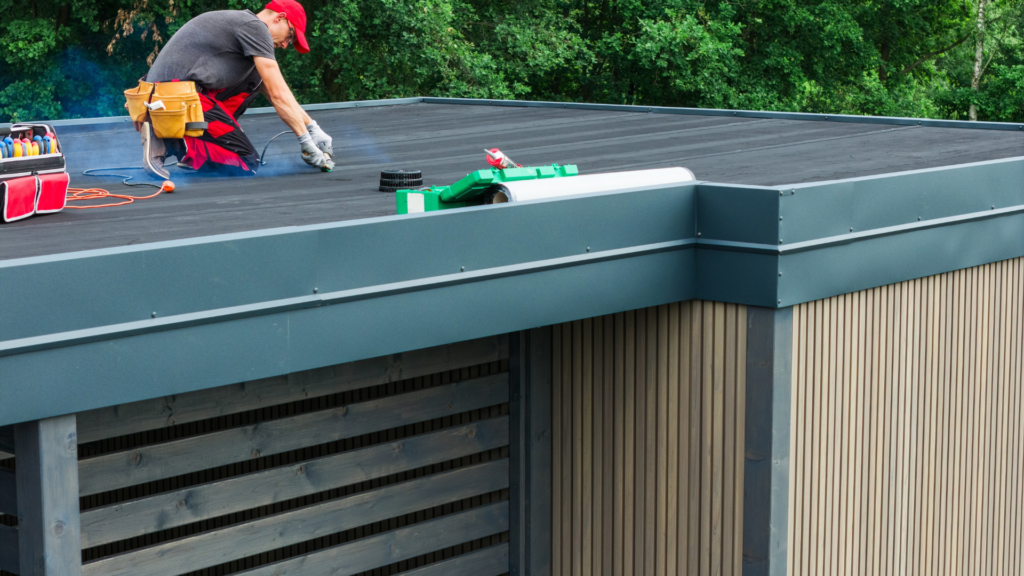
Flat roof repair in Toronto can be a relatively small job when the damage is isolated, or a much larger project when water has reached insulation, decking, flashing or several areas of the membrane. The cost and timeline depend on what failed, how easy the roof is to access, the roofing system in place, and whether the problem is limited to the surface or extends below it.
A proper inspection is the best way to separate a straightforward repair from a larger roof condition issue.
Flat and low-slope roofs manage water differently from pitched shingle roofs. Because they depend heavily on the membrane, seams, flashing, drains and scuppers to keep water moving and the building dry, a leak that looks small indoors can have more than one possible source.
Why Flat Roof Repairs Need a Different Approach
A flat roof should be treated as a complete waterproofing and drainage system, not simply as a surface that needs a patch. The visible leak is the symptom. The repair has to address the pathway that allowed water into the roof assembly.
Flat roofs are common on commercial buildings, garages, additions, porches and many Toronto homes. They are not perfectly level. A functioning low-slope roof is designed to direct water toward roof drains, scuppers or perimeter drainage.
When diagnosing a flat roof problem, a roofer may need to check:
- The condition of the roof membrane
- Seams and laps
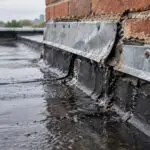
- Flashing at walls, parapets and roof edges
- Drains and scuppers
- Vents, skylights and other penetrations
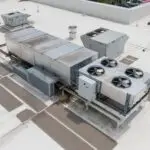
- Rooftop HVAC curbs and equipment
- Areas of ponding or poor drainage
- Insulation and deck condition where moisture is suspected
Dominion Roofing’s residential flat roof repair and replacement services cover inspection, repair and replacement needs for residential flat roofing systems. Dominion’s current flat-roof information also identifies drainage, membrane condition and the extent of damage as important considerations when determining whether a roof can be repaired.
What Are the Most Common Flat Roof Problems?
The most common flat roof repair calls involve leaks, damaged seams or membrane, flashing problems and drainage issues. The important part is finding out which problem is actually allowing water into the building.
Ponding Water and Drainage Problems
Water that repeatedly sits in the same area after rain may point to a blocked drain, low spot, inadequate slope or a change in the roof surface.
Ponding does not automatically mean the entire roof has failed, but it should not be treated simply by patching the area without checking why the water is staying there.
Drainage matters because standing water keeps seams, flashing and membrane details wet for longer periods. If the roof already has a vulnerable area, recurring ponding can make that weakness easier to expose.
Dominion’s commercial roof repair service specifically identifies drainage issues and ponding water as flat-roof problems that should be addressed.
Open Seams, Splits and Punctures
Flat roof membranes can be damaged by age, weather, foot traffic, dropped tools, service work around rooftop equipment or previous repairs.
A small puncture may be a localized repair if the surrounding membrane and insulation remain in good condition.
The repair method also depends on the roofing system. Dominion notes that modified bitumen roofs can sometimes have small damaged areas repaired and that membrane roofs, including rubber and PVC systems, can also be patched in appropriate circumstances. More extensive deterioration may make replacement more practical than continuing to repair multiple areas.
Flashing and Penetration Leaks
Roof penetrations are common places for leaks because they interrupt the main waterproofing surface.
Flashing around parapet walls, vents, skylights, drains, curbs and mechanical equipment has to remain watertight while dealing with weather exposure and normal building movement.
A repair that seals only the obvious surface opening can miss the real entry point. Water may travel beneath the membrane or through part of the roof assembly before it becomes visible on the ceiling below.
Wet Insulation or Roof Deck Damage
Once water gets below the membrane, the scope of the repair can change significantly.
Wet insulation may need to be removed and replaced. If decking has deteriorated, additional work may be necessary before the waterproofing layer can be restored.
This is why two roof leaks that produce similar ceiling stains can result in very different repair estimates.
What Does Flat Roof Repair Cost in Toronto?
There is no reliable flat roof repair price based on the appearance of the leak alone.
The most important cost factors are the size and location of the damaged area, the roofing system, roof access, the repair method required and whether moisture has affected materials below the membrane.
Dominion’s Toronto roof repair cost guide takes the same approach. Rather than publishing one standard price, it explains that repair costs vary according to the source of the problem, access, materials and the amount of surrounding damage.
For a flat roof, these factors deserve particular attention.
1. How Much of the Roof Needs to Be Opened or Repaired
A small membrane puncture with dry material underneath is a different job from a leak that requires removal of a larger section of membrane and insulation.
The required repair area can also be larger than the stain visible inside the property. The roofer first needs to find where water entered and determine how far it travelled.
2. The Flat Roofing System
Repair methods and materials must be compatible with the existing roof.
Modified bitumen, built-up roofing and single-ply membrane systems do not all use the same materials or repair procedures.
For example, Dominion’s commercial flat roofing information describes two-ply modified bitumen systems that use two membrane layers over the roof assembly. Its residential flat roofing content also discusses modified bitumen as an option for residential applications.
A contractor should identify the existing roofing system before deciding how a damaged section should be patched, reinforced or replaced.
3. Roof Access
A garage roof with straightforward access is different from a multi-storey commercial roof that requires controlled access, additional safety setup or extensive material handling.
Restricted access can add labour for setup, material handling and safety controls before the repair work begins.
4. Drainage and Ponding
If the leak is connected to a blocked drain, failed drain detail or localized low spot, repairing the membrane alone may not solve the problem.
Drainage correction can increase the scope of work, but correcting the cause may prevent the same area from failing again.
5. Moisture Below the Surface
A leak that has reached insulation or decking requires more investigation than a surface-level puncture.
The contractor needs to determine what is wet, what remains serviceable and what should be removed before the roof is closed again.
This is one of the largest reasons a repair estimate can change after a thorough assessment.
6. Flashing and Rooftop Equipment
Repairs around parapet walls, curbs, HVAC equipment, skylights or other roof penetrations can take longer because their waterproofing details are more involved than a repair in an open section of membrane.
The most useful flat roof estimate should therefore explain the cause, repair area and proposed work. A price without a diagnosis does not tell the property owner whether the contractor is correcting the source of the problem or simply covering a symptom.
How Long Does Flat Roof Repair Usually Take?
A minor flat roof repair may take a few hours, while larger repairs can take several days.
Dominion gives this same general timeframe in its current commercial roofing information and explains that repair duration depends on the scope of the work.
Several conditions can make the repair take longer:
- The leak has to be traced before its source is confirmed
- Wet insulation or damaged materials have to be removed
- Flashing has to be rebuilt
- Drainage needs to be corrected
- Several areas of membrane require repair
- Rooftop equipment makes access more difficult
- Weather does not allow the required material to be installed safely or correctly
For commercial properties, building access, tenant schedules, rooftop equipment and safety requirements may also affect the schedule.
Dominion’s commercial roof repair services address flat roof leaks, drainage issues and ponding water for commercial properties.
What Happens if the Roof Is Actively Leaking?
Stopping active water entry and completing the permanent repair are not always the same step.
In some situations, temporary measures may be used first to help protect the building until the roof surface is dry and conditions allow the permanent repair to be completed correctly.
The contractor should explain whether the initial work is temporary or permanent, what additional work is required and when the final repair can reasonably be completed.
Repair or Replace: How Do You Know Which Makes Sense?
Repair usually makes sense when the problem is localized and the surrounding roof remains in serviceable condition.
Replacement becomes more reasonable when leaks are recurring, the membrane is deteriorating in several areas, moisture is widespread or repair costs are becoming frequent enough that they no longer represent good long-term value.
Roof age is useful context, but moisture spread, membrane condition, drainage and the pattern of previous repairs are stronger indicators of whether another repair is worthwhile.
A newer roof with widespread installation or drainage problems can need significant work. An older flat roof with one isolated defect may still be repairable.
Questions worth asking include:
- Is the damage confined to one area?
- Is the insulation below the repair dry?
- Is the surrounding membrane still serviceable?
- Is the roof draining properly?
- Have previous repairs failed in the same location?
- Are there several active leak points?
- Will the proposed repair address the cause or only the symptom?
Dominion’s roof repair or replacement guide follows the same basic approach. Roof condition, repair scope, cost and long-term value need to be considered together.
Why an Inspection Matters Before Pricing
Flat roof leaks can be harder to trace than they appear from inside the building.
The water stain tells you where moisture became visible. It does not necessarily tell you where water first entered the roof.
A useful flat roof inspection should look beyond the stain and assess the membrane, seams, flashing, drains, scuppers, penetrations, roof edges and areas where water is collecting.
Where there are signs of moisture below the surface, additional investigation may be needed before the final repair scope can be confirmed.
This also matters when comparing estimates.
A written proposal should make clear:
- What area is being repaired
- What the suspected or confirmed source of the problem is
- What roofing components are included
- Whether drainage work is required
- Whether damaged insulation or decking is included
- What may change the scope once the roof is opened
- Whether the work is intended as a temporary or permanent repair
A detailed scope makes it easier to compare two quotes fairly. The lowest price may not be the lowest-cost option if important parts of the repair have been left out.
How to Reduce the Chance of Another Flat Roof Repair
Keeping drains and scuppers clear, then repairing open seams, flashing defects and punctures before water reaches the insulation, reduces the chance that a small defect becomes a larger repair.
A flat roof does not need to be ignored until water appears on a ceiling.
Property owners should watch for:
- Water remaining in the same area after rainfall
- Debris collecting around drains or scuppers
- Blistering, cracking or open seams
- Loose or deteriorated flashing
- Damage following HVAC or other rooftop service work
- New ceiling stains or damp areas
- Changes in the roof surface that create obvious low spots
Late summer is also a useful time to pay attention to drainage. Problems exposed by heavy summer rain can be addressed before fall debris begins collecting around roof drains and before another Toronto freeze-thaw season.
Roof access should still be treated as a safety issue. Do not walk onto a wet, icy or visibly damaged roof simply to investigate a leak.
Photos taken from a safe location and notes about when the leak appears can help a roofing contractor understand the pattern before arriving.
What Should You Ask Before Approving a Flat Roof Repair?
A good repair proposal should give you enough information to understand what you are paying for.
Before approving the work, ask:
- What is the most likely source of the leak?
- What roofing system is currently installed?
- Is the repair limited to the membrane?
- Is insulation or decking involved?
- Does drainage need to be corrected?
- Is the proposed work temporary or permanent?
- How long should the repair take under normal conditions?
- What happens if additional wet material is discovered?
- Is repair still the best value compared with replacement?
Clear answers make it easier to compare repair proposals based on the actual work rather than choosing solely by the lowest number.
The Bottom Line
Flat roof repair in Toronto is difficult to price accurately until the source and extent of the problem are known.
A small, accessible membrane or flashing repair may be completed relatively quickly. Work involving wet insulation, drainage corrections, extensive membrane damage, difficult access or multiple leak points can require considerably more time and labour.
The best estimate should explain what failed, what needs to be repaired and why.
If leaks are recurring or damage extends beyond one localized area, the discussion should also include whether continuing to repair the roof still makes financial sense compared with replacement.
If your property has an active flat roof leak, ponding water or visible membrane damage, Dominion Roofing can assess the condition of the roof and recommend an appropriate repair or replacement approach.
Frequently Asked Questions
How much does flat roof repair cost in Toronto?
Flat roof repair cost depends on the roofing system, size and location of the damaged area, roof access, drainage and whether water has reached insulation or decking. A site assessment is the most reliable way to turn those factors into an accurate written estimate.
How long does a flat roof repair take?
Minor repairs may take a few hours, while larger repairs can take several days depending on the scope. Leak tracing, wet insulation, flashing work, drainage correction, weather and roof access can all extend the schedule.
Can ponding water on a flat roof be repaired?
Yes, many ponding problems can be corrected once the cause is identified. The work may involve clearing or repairing drainage, correcting a localized low area, repairing membrane details or addressing a larger slope or roof-system issue.
Can a flat roof leak be repaired without replacing the whole roof?
Yes, a localized leak can often be repaired when the surrounding membrane, insulation and roof deck remain in serviceable condition. Replacement becomes more likely when damage is widespread, leaks continue to return or moisture has affected several areas.
Should I repair or replace an older flat roof?
Age is only one part of the decision. The condition of the membrane, number of leaks, drainage performance, moisture below the surface and cost of previous repairs are more useful indicators of whether another repair still makes financial sense.